
There’s nothing worse than meat that isn’t flavorful. But there’s also nothing worse than opening the fridge an hour before people show up and realizing the chicken has been sitting there naked since yesterday.
So here’s the good news, and it’s better news than you’d expect: it is almost never too late to rescue unmarinated meat. Marinades do a lot… but they take far less time than people think.
Below you’ll find how long to marinate every common cut, what happens if you leave it too long, and exactly what to do when you’re out of time.
How long to marinate chicken, beef and pork
The rule is simple: the tougher and bigger the cut, the longer it can (and should) marinate. Tender cuts and seafood need very little time, and actually, giving them too much time does more damage than good.
|
Cut |
Marinating time |
|
Whole chicken |
4 to 12 hours |
|
Bone-in chicken pieces |
2 to 6 hours |
|
Boneless chicken breasts or thighs |
30 minutes to 2 hours |
|
Beef roasts (chuck, brisket) |
2 to 8 hours |
|
Tougher steaks (strip, London broil) |
1 to 2 hours |
|
Tender steaks (sirloin, skirt, flank) |
30 minutes to 1 hour |
|
Pork shoulder |
2 to 8 hours |
|
Pork chops and lamb chops |
30 minutes to 1 hour |
|
Fish fillets, scallops, shrimp |
15 to 20 minutes |
|
Whole fish or thick fish steaks |
About 30 minutes |
|
Dense vegetables (carrots, squash, potatoes) |
1 to 2 hours |
|
Soft vegetables (zucchini, tomatoes, broccoli) |
30 minutes to 1 hour |
Please note: Every one of those assumes the meat is in the refrigerator, not sitting on the counter. More on that below.
Can you marinate too long?
Yes, and it’s a super common mistake! Most marinades contain acid, whether that’s citrus juice, vinegar, wine, or buttermilk. Acid firms up the proteins on the surface of the meat, which works for about an hour. Leave it much longer, and that same acid keeps going until the outer layer turns chalky, stringy, or unpleasantly soft.
Shrimp and fish suffer the fastest. Citrus will essentially start to cook them, which is a great thing if you’re making ceviche and a bad thing if you were planning to grill. Fifteen to twenty minutes is genuinely the limit there.
Chicken and pork are more forgiving, and a tough beef roast can sit for most of a day, but the general rule is: the more acidic your marinade, the less time your meat should spend in it.
What a marinade actually does
Contrary to popular belief, marinades barely penetrate meat at all. In fact, testing found that most marinades rarely reach more than an eighth of an inch into the meat, even after many hours of soaking. Not an inch. An eighth of an inch.
Breaking it down further:
- Salt travels deepest. It’s the only common marinade ingredient that really moves through meat, and even then it takes close to 24 hours to reach an inch.
- Acid works on the surface. It affects roughly an eighth to a quarter inch, first firming the proteins and eventually mushing them.
- Garlic, herbs, spices, and sugar mostly stay put. Their molecules are too large to travel, so they sit within about a sixteenth of an inch of the surface or settle into cracks.
- Oil doesn’t penetrate at all. In testing, olive oil placed directly into a hole cut in a steak had gone nowhere after three hours.
So a marinade is a surface treatment. It’s a very good surface treatment, and the surface is where a lot of flavor lives, but it doesn't soak into the middle of your chicken breast, no matter how long you leave it.
Which is exactly why forgetting to marinate overnight is A-OK.

Forgot to marinate? Here’s how to catch up
Let’s say you have about an hour, and you’re dealing with a chicken that’s been sitting there doing nothing. Here’s how you can make it as flavorful as possible.
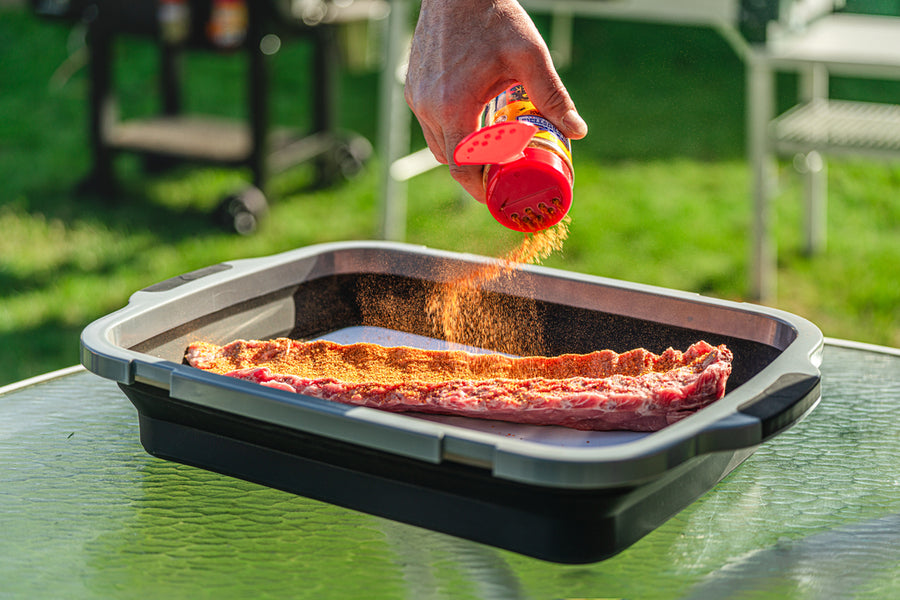
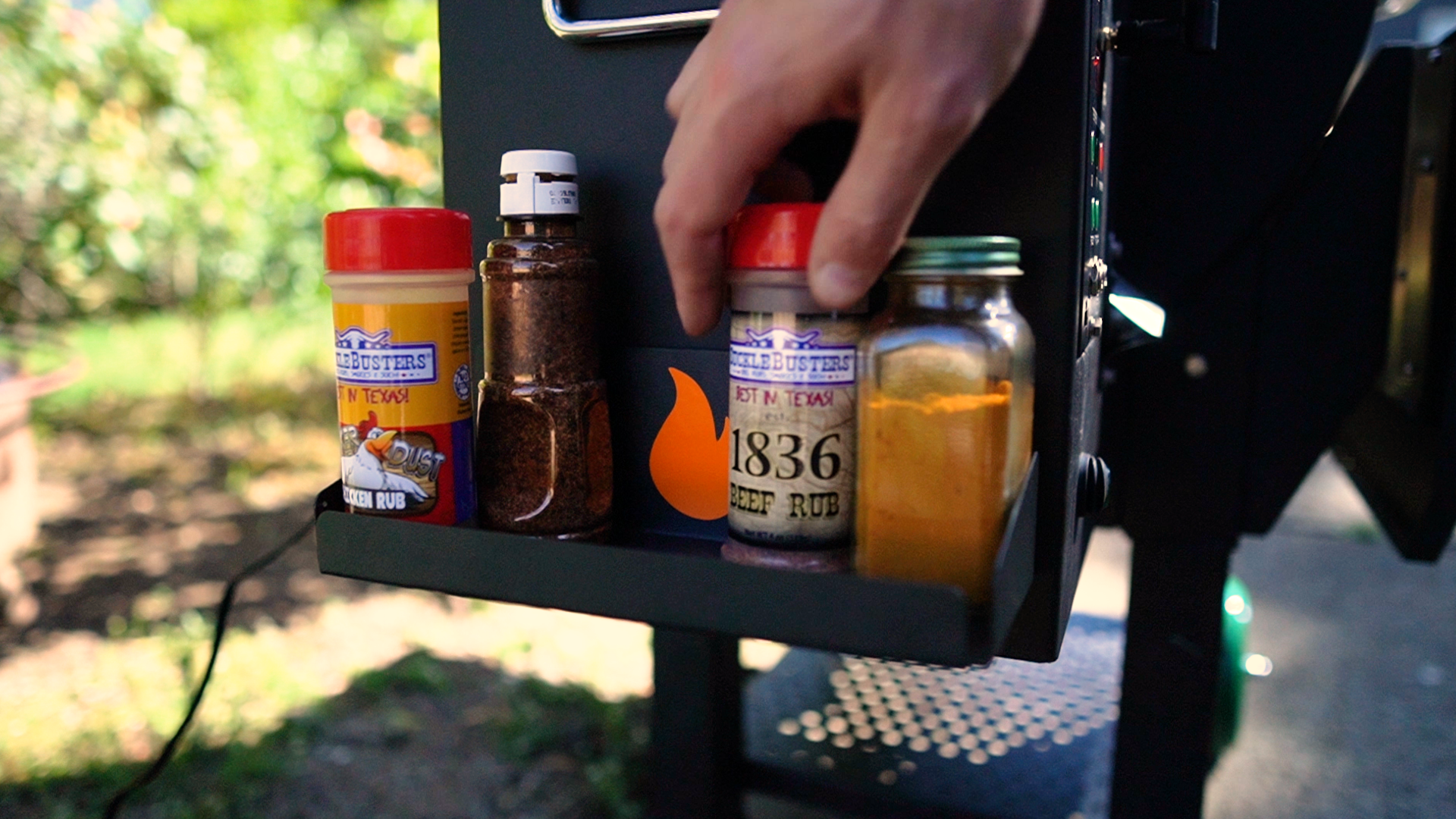
- Switch to a dry rub. A rub or a thick paste will deliver more flavor per square inch than a marinade; it takes two minutes, and it builds a crust while it cooks. Something like DB’s Original Rub gets you further than an overnight soak would have.
- Make the pieces smaller. Marinade only reaches the surface, so make more surface. Cut chicken breasts into cutlets, slice steak into strips, pound things thin. A thin cutlet marinated for 20 minutes is better seasoned than a whole breast marinated for eight hours.
- Score the meat. Shallow cuts across the surface give the marinade somewhere to go. It reaches into the gashes, which effectively increases how much of the meat gets flavored.
- Salt it now. Even 30 or 40 minutes of salt does real work, because salt is the one ingredient that travels. Salt first, then add everything else.
- Try an enzyme. Fresh pineapple, papaya, or ginger contain enzymes that tenderize in 30 to 60 minutes. They don’t add much flavor, but they can do wonders with the texture.
- Sauce it after. The most underrated option. Cook the meat well, season it properly, and bring the flavor at the end with a sauce or a glaze. (Nobody at the table will know).
Oh, and don’t worry about those online “tricks” you may have seen like vacuum marinators or stabbing the meat with a fork. Vacuum devices pull juice out of the meat rather than driving marinade in, and testing shows minimal effect. Piercing creates holes that close right back up, and it can push surface bacteria down into the meat, which isn’t helpful.
How to marinate without the mess
Marinating in a zip-top bag works fine, until the bag tips over in the fridge, or it leaks onto the shelf below.
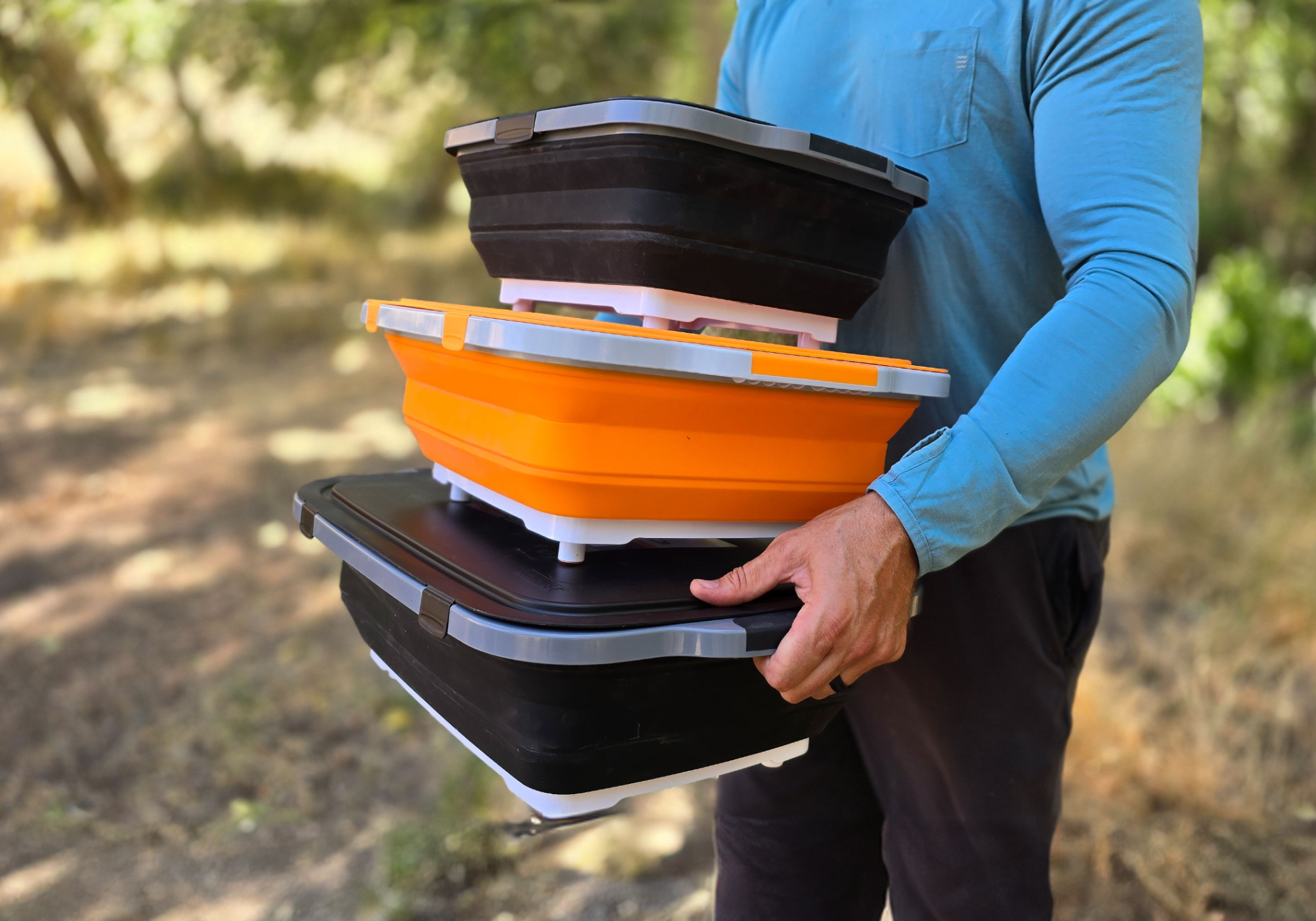
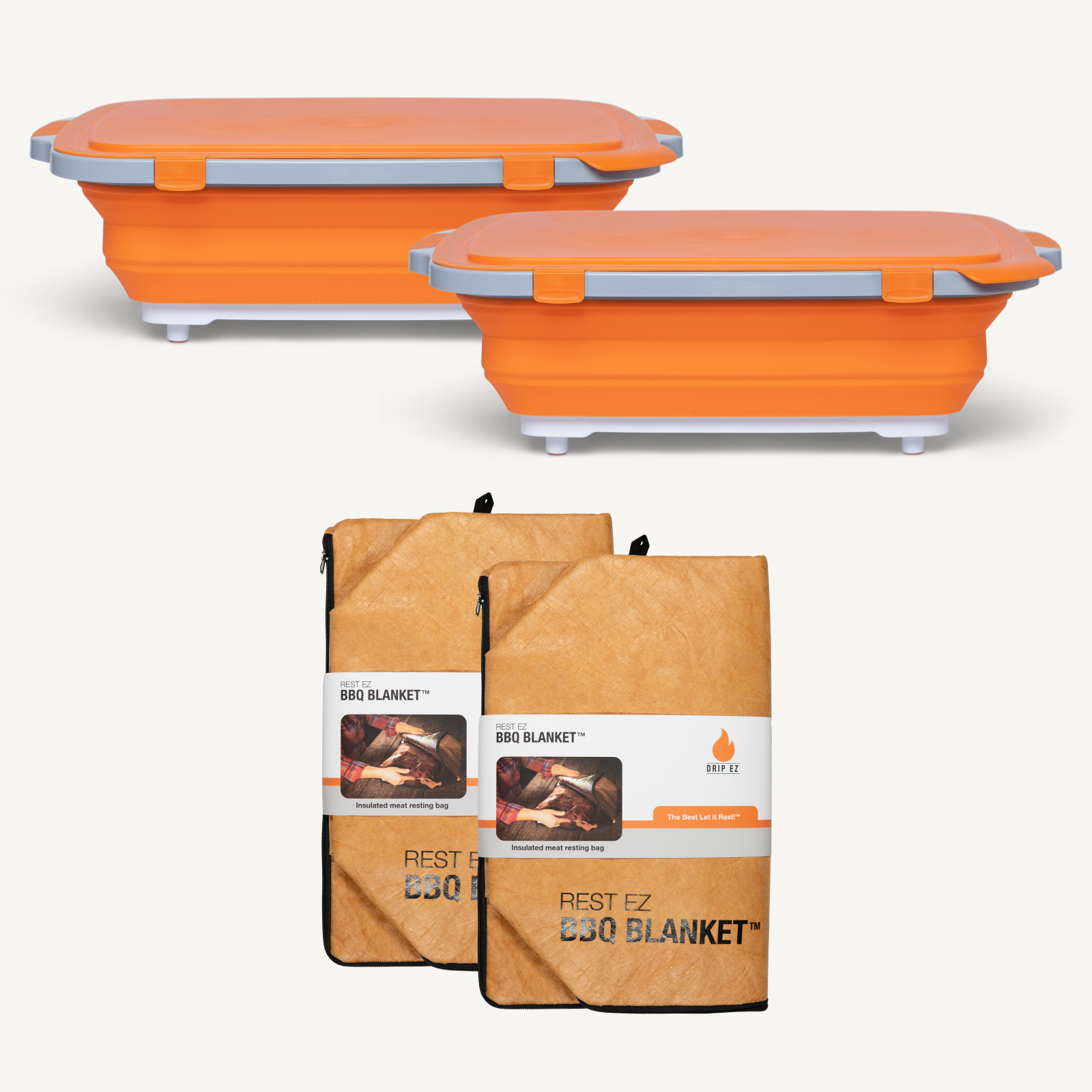
A BBQ Prep Tub makes prepping super easy. Season and marinate your meat right in the tub, snap on the locking lid, and it goes into the fridge without leaking. When it’s time to cook, the same container carries everything out to the grill, and after you wash it, the built-in cutting board is perfect for carving.
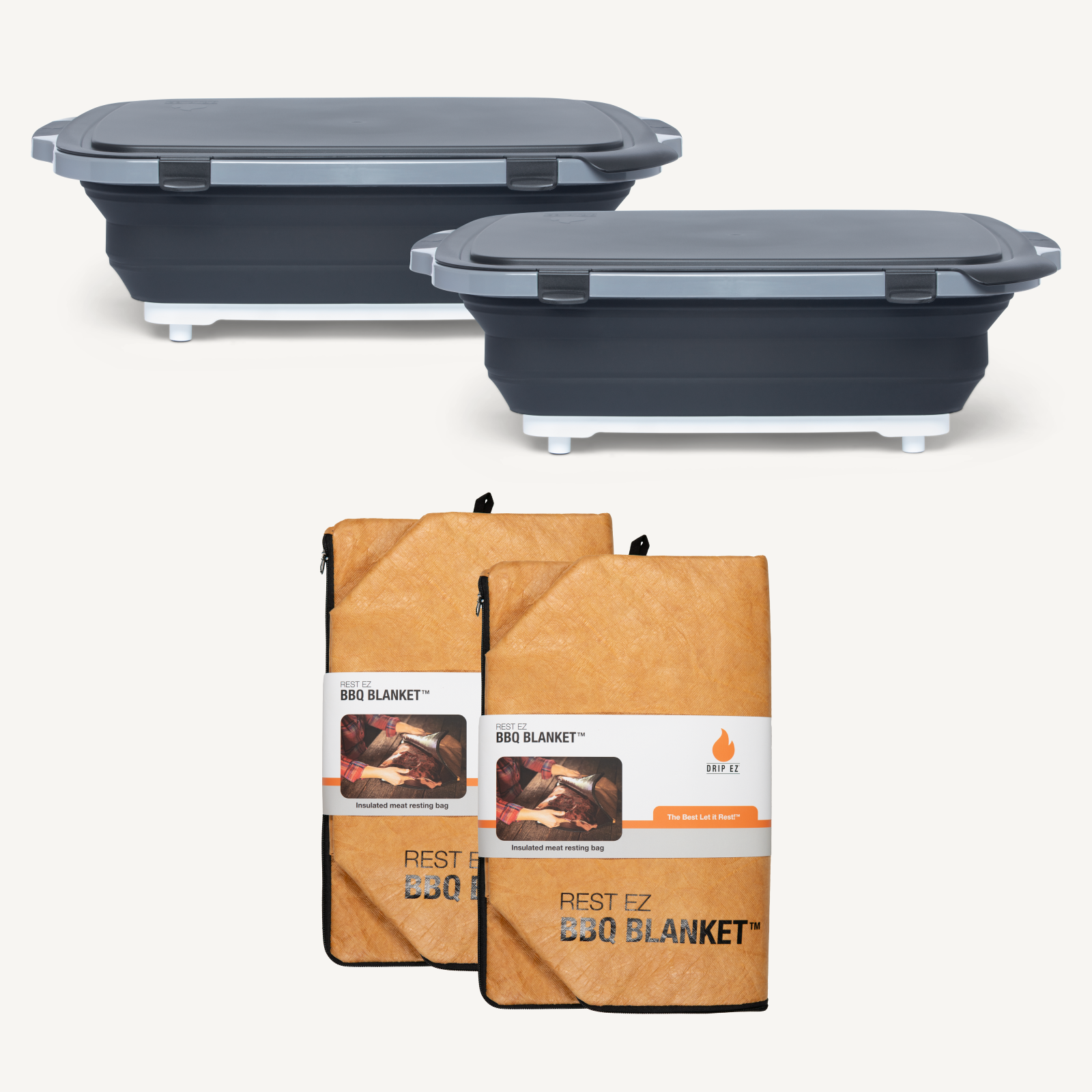
If you’re marinating more than one thing, the 3-piece set lets you keep proteins and vegetables separate, which also keeps you from cross-contaminating. Not sure which size fits your cooks? We broke that down here.
Marinating safety rules
- Marinate in the refrigerator, never on the counter. Acid does not kill bacteria, and a few hours at room temperature puts your meat squarely in the danger zone.
- Don’t reuse marinade that touched raw meat. If you want to serve some as a sauce, set a portion aside before the meat goes in. If you only remembered after the fact, bring the used marinade to a full boil first.
- Use a non-reactive container. Glass, stainless steel, BPA-free silicon (like our Prep Tubs), or food-safe plastic. Acidic marinades react with aluminum and cast iron, picking up a metallic taste.
- Pat the meat dry before it hits heat. A wet surface steams instead of searing, which costs you the browning you were after in the first place.
Once it’s cooked, the usual rules apply. Our resting guide covers how long each cut needs and how to hold it safely.
Marinating FAQ
How long should I marinate chicken?
Boneless chicken needs 30 minutes to 2 hours, bone-in pieces need 2 to 6 hours, and a whole chicken can go 4 to 12 hours. Always refrigerate.
How long should I marinate steak?
Tender cuts like sirloin, skirt and flank need only 30 minutes to an hour. Tougher cuts like London broil or strip can take 1 to 2 hours, and large roasts can go 2 to 8 hours.
Can you marinate meat too long?
Yes. Acidic marinades break down the meat's surface over time and can turn it mushy or chalky. Seafood is the most sensitive and should stay under 30 minutes. The more acid in your marinade, the shorter the window.
Can you marinate meat overnight?
For tough, large cuts like pork shoulder, chuck roast, or a whole chicken, yes. For tender steaks, chops and any seafood, overnight is too long and will hurt the texture.
Does marinating actually tenderize meat?
Barely. Marinades rarely penetrate more than an eighth of an inch, so any tenderizing happens only at the surface. Salt does more useful work than acid, and physically cutting or pounding the meat does more than either.
Can I marinate on the counter to speed it up?
No. Raw meat should never sit at room temperature for more than an hour, and acid in a marinade does nothing to kill bacteria. Use smaller pieces or a dry rub instead.
Can you reuse marinade?
Not if it touched raw meat, unless you boil it first. The safer habit is to set aside a clean portion for serving before you add the protein.
In summary: how long to marinate meat
Tender cuts and seafood want a short soak, tough cuts can take a long one. Boneless chicken sits for 30 minutes to 2 hours, bone-in pieces for 2 to 6, and a whole bird for 4 to 12. Tender steaks need only half an hour to an hour, while a chuck roast or pork shoulder can go the better part of a day. Fish and shrimp come out after 15 or 20 minutes, no exceptions.
You absolutely can marinate too long. Acid keeps working on the surface of the meat the entire time it sits, and past a certain point it stops improving the texture and starts ruining it. When in doubt, pull it early.
And if you forgot entirely, don’t panic. Marinades only reach about an eighth of an inch into meat no matter how long they sit, so you haven’t lost nearly as much as you think. Reach for a dry rub, cut the meat into smaller pieces, salt it right away, and finish with a sauce. You’ll get there, and nobody has to know it wasn’t the plan all along.