
Time has never crept by slower than when you’re waiting for your meat to finish resting after smoking. After all that work, you’re ready to dig into that first bite and declare that first “mmmm.” And if you’re cooking for a crowd, there’s no doubt your hungry guests are eager to do the same.
But, from our family to yours, we beg you: don’t cut into your meat too early. The difference between resting and not resting your meat is enough to make the wait worth it.
(Don’t believe us? Check out this video where one of our ambassadors, pitmaster Nick “Heatstroke” Keith, shows us the difference).
So here’s how to rest your meat properly after smoking.
What's happening while your meat rests?
When you cook a large cut low and slow, you're doing two things at once: breaking down collagen into gelatin and driving moisture toward the center as the muscle fibers tighten.
But when you cut into it right off the smoker, all of that moisture you’ve built up has nowhere to go but onto your cutting board. That’s why a big puddle spreading out from the first slice actually isn’t a good thing. It’s a sign that the moisture is leaving the meat.
Give it time instead, and the fibers relax, the gelatin thickens as it cools, and the juice that got pushed to the center redistributes back through the whole cut, leaving you with tender, juicy perfection

How to rest your meat after smoking (step by step)
Step 1: Wrap it.
Use butcher paper or foil (paper breathes a little and protects your bark, while foil holds more moisture and softens the bark). Neither is wrong; it's a texture preference.
Step 2: Into the Resting Vessel.
This is where some people mess up: they do the classic towel-and-cooler method. We get it: there are some die-hard pitmasters who swear by the classic towel-and-cooler resting method. But the problem with it is (aside from it stinking up both your laundry and cooler) that the temperature tends to drop too quickly this way. We’ve tested it, and so have expert barbecuers like Erik Svendson.
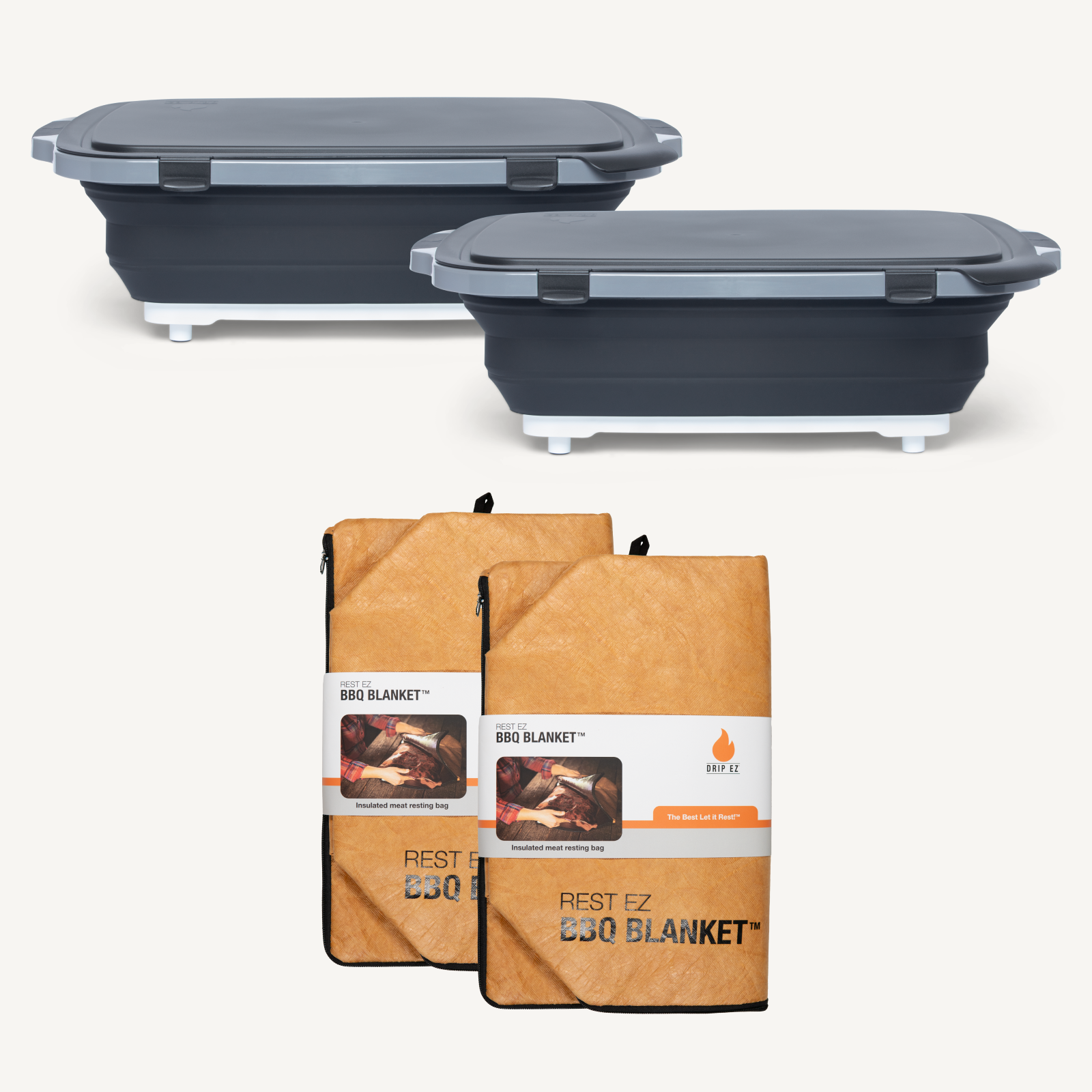
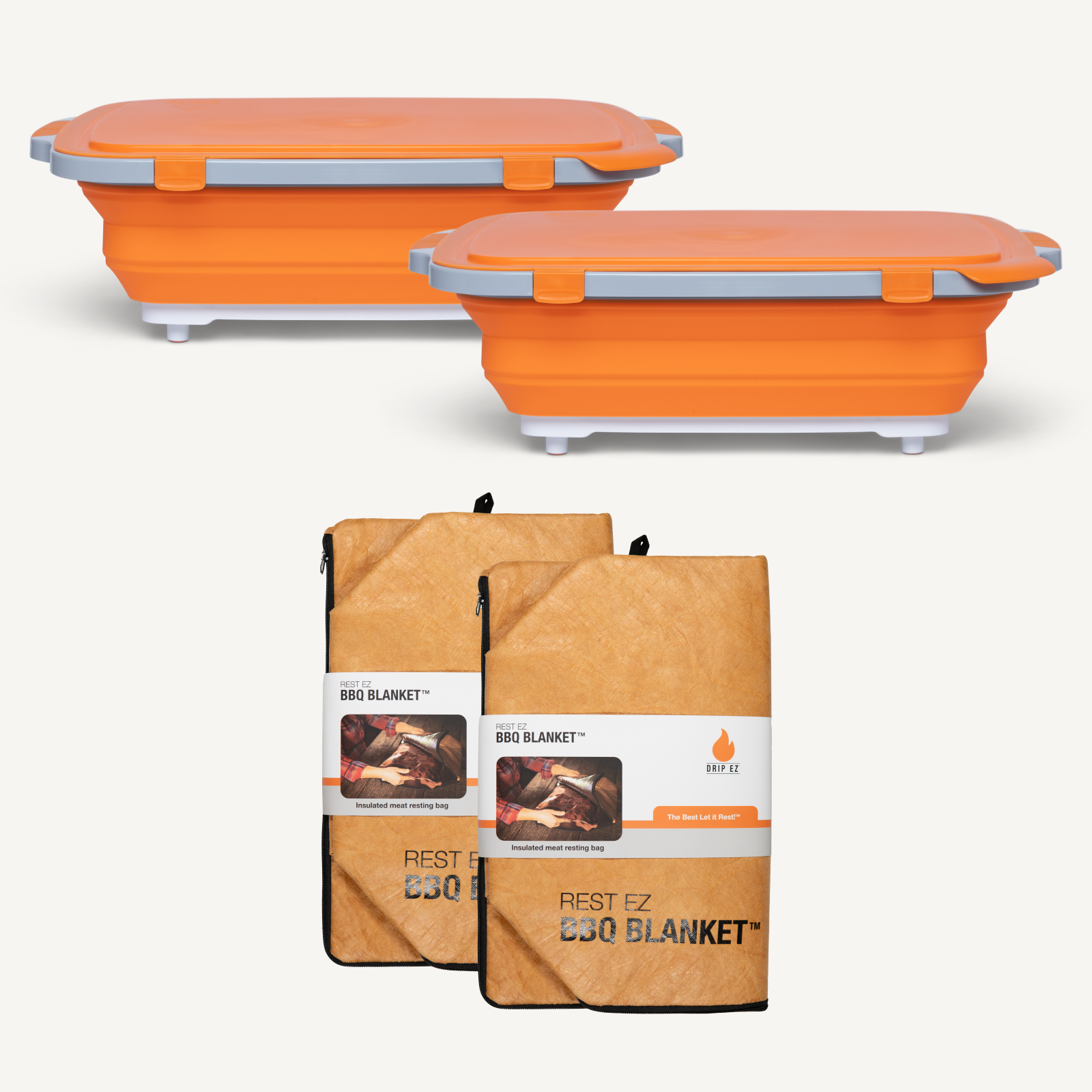
That’s why, for the best results, the best pitmasters we know swear by the Rest EZ BBQ blanket. It slows heat loss instead of stopping it, which is exactly what you want: a slow, controlled temperature descent rather than meat that either goes too cold on the counter or keeps cooking in a hot cooler.
“We built the blanket because I was tired of tying up a cooler and a stack of towels every single cook,” Drip EZ CEO and founder David Barton said. “There had to be a better way to do the one step everybody skips.”
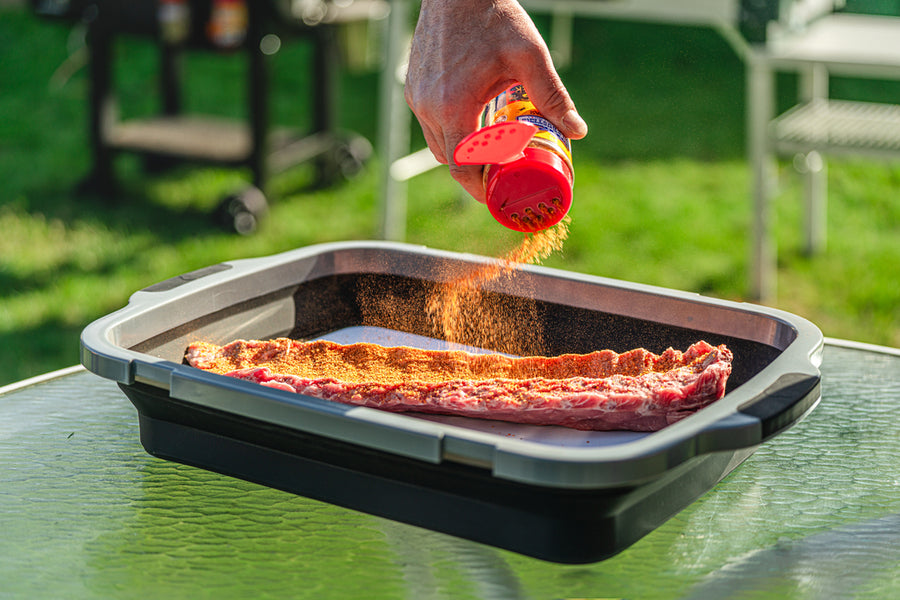
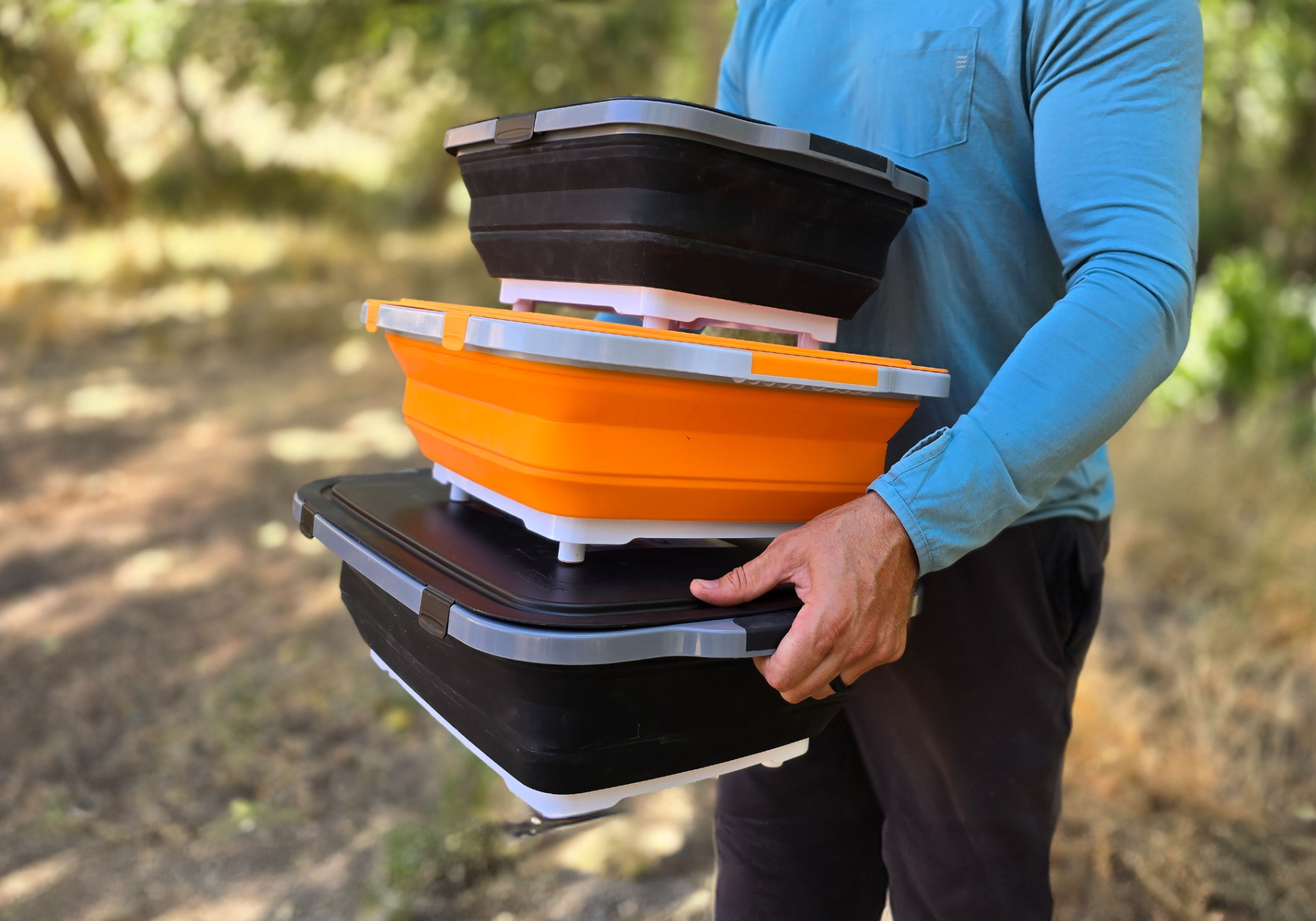
Step 3: Set it in a Prep Tub.
Technically, this step is optional, but we do it every time. A prep tub makes it easier to move your meat-baby, now wrapped in its blanket, from the deck to the kitchen counter, and when it's sitting in something with sides, the walls help provide further insulation while the meat rests.
Step 4: Set your timer.
The bigger the cut, the bigger the resting window. For example, two hours should be the minimum for a packer brisket or a whole pork butt, but we recommend building in a four-hour cushion if you can afford it.
Pro tip: Pull your meat off the heat source 3 to 5°F below your target temperature to prevent overcooking while it rests.

|
Cut |
Rest Time |
Internal Temperature |
|
Burgers |
2-3 minutes |
160°F |
|
Steaks and Chops |
5-10 minutes |
130°F medium-rare / 140°F medium / 160°F well-done |
|
Chicken |
10-15 minutes |
160°F breast / 175°F thigh |
|
Pork Loin or Roast |
15-20 minutes |
140–145°F |
|
Ribs |
15-30 minutes |
Not temp-based |
|
Tri-tip |
20-30 minutes |
130°F |
|
Whole Turkey or Large Poultry |
30-45 minutes |
160-165°F breast / 170-175°F thigh |
|
Brisket |
1-2 hours minimum |
200–205°F |
|
Pork Butt/Shoulder |
2-5 hours |
190-205°F pulled / 180-185°F sliced |
Please note: If you're holding for three or four hours, or resting two cuts at once, the Rest EZ 'Que Crib Meat Resting Station is a great upgrade to consider. It's a dedicated insulated resting station with locking latches and a heat-trapping interior, so it’s roomy enough for two XL Prep Tubs.
One thing to watch: keep it above 140°F
Remember: the USDA danger zone is 40°F to 140°F, which is the range where bacteria multiply quickly. Cooked meat shouldn't sit in that window for more than two hours total. A long rest is safe as long as your meat stays above 140°F the whole time.
So if you're resting a brisket for four hours to feed a crowd, put a probe in it and actually watch the number. When the internal temp gets near 140°F, it's time to slice and serve.
Then, finally, slice it
Ahh, now the good part: time to slice and serve. Remember to cut against the grain. (If you need a good carving knife, check out this one).
If you did the rest right, the cutting board should stay mostly clean, and the juice should stay in the meat.
Enjoy!
Ready to Rest Like a Pitmaster?
The Rest EZ BBQ Blanket takes the guesswork out of the most overlooked step in barbecue. Insulated, heat-reflective, wide-mouth, and easy to wash.