
If you don’t know your meat cuts, standing at the butcher counter can feel a little like walking into a gym full of equipment you don’t know how to use.
Sure, there are the obvious cuts, like ribeye or bacon. But there's also a whole case of things called flat iron and tri-tip and Boston butt and picnic shoulder, all at wildly different prices – and, if you’re not familiar with them, you’re probably not cooking them. Which means your barbecuing game is missing entire categories of goodness.
But can we share a secret? You don’t have to memorize forty different cuts; you just have to understand one main concept!
The main meat-cut concept: Where it comes from tells you how to cook it
It doesn’t matter if it’s beef, pork, lamb… whatever. Muscles that worked hard, like the shoulder, leg, and chest, are full of connective tissue. They're tough, usually cheaper, and need low heat and a lot of time so the connective tissue can break down into gelatin.
Muscles that didn't do much — the ones tucked along the back, up against the spine — are tender. They're more expensive, and they need high heat and not much time.
That's the basic logic of a butcher counter. A brisket sits on the chest holding up a thousand-pound animal all day, which is hard work… so you smoke it for twelve hours (also hard work). A tenderloin sits along the spine doing very little, so you have to do very little to cook it: sear for a few minutes and it’s done.
Once you know where a cut sits, you can make a very good guess about how to cook it. So here's where everything sits.

Beef
A cow gets broken down into eight big sections called primals.
Chuck (the shoulder)
Cuts: Chuck roast, chuck eye steak, flat iron, Denver steak, shoulder tender, short ribs.
The shoulder works constantly, which makes chuck tough, cheap, and loaded with fat and connective tissue that turn into flavor with time.
Cook beef shoulder cuts low and slow. Chuck roast is pot roast; chuck short ribs are a braise.
The exception is worth knowing: a flat iron comes from the top blade, which does almost no work, and it's the second-most tender cut on the animal. It grills like a steak for half the price. Ask your butcher for one!
Rib
Cuts: Ribeye, bone-in rib steak, tomahawk, prime rib roast, back ribs.
This is the marbling section, which is why a ribeye tastes like a ribeye. Cook steaks hot and fast, or roast prime rib whole. Don't over-season it and don't take it past medium. You're paying for fat, and you want it rendered, not cooked out!
Please note: Back ribs are the bones left behind after the ribeye comes off. Those go low and slow.
Short loin
Cuts: New York strip, T-bone, porterhouse, tenderloin (filet mignon).
The most tender section of the cow, priced accordingly. A T-bone and a porterhouse are the same idea — strip on one side of the bone, tenderloin on the other — with the porterhouse carrying a bigger piece of tenderloin.
Grill short loin cuts hot and fast. There's no connective tissue to break down here, so there's nothing to gain from time and everything to lose.
Sirloin
Cuts: Top sirloin, tri-tip, coulotte (picanha), flap meat, ball tip.
Where value and flavor meet. It sits just behind the short loin, so it did slightly more work: a little less tender, a lot less expensive, and arguably beefier.
Grill it. Tri-tip especially. It’s big enough to feed a crowd, cheap enough to experiment with, and best at medium-rare over two-zone heat, and sliced against the grain.
Round (the rear leg)
Cuts: Top round, bottom round, eye of round, rump roast, knuckle.
The back leg walks all day, but it's also very lean, so you get toughness without much fat to balance it out. This is the trickiest cut.
Roast it low and slice it thin, or braise it. Eye of round makes excellent roast beef cooked gently and sliced paper-thin. It won't survive being treated like a steak over high heat.
Brisket (the chest)
Cuts: The whole packer (two muscles — the flat and the point), or the flat on its own.
The chest supports enormous weight, which makes brisket one of the toughest cuts on the animal and, cooked right, one of the best things you'll ever eat.
Low and slow, then rested longer than you think. This one has a learning curve, and it's the cut most worth jumping over hoops for. (We wrote a whole guide on when to pull a brisket, because the number on the thermometer isn't the answer.)
Short plate (the belly)
Cuts: Skirt steak, short ribs.
These cuts come with two opposite approaches, which is why this section confuses people.
Skirt steak is thin and loose-grained: sear it screaming hot for two minutes per side, then slice against the grain. It's the fajita cut, and it does not want to be cooked slowly. Plate short ribs are the reverse — thick, fatty, heavily connective. Smoke or braise them for hours.
Flank
Cuts: Flank steak, hanger steak.
Flank is the abdominal wall: lean, muscular, strongly grained. Marinate, sear hot, pull at medium-rare, slice thin against the grain. That last part isn't optional — flank's muscle fibers are long and obvious, and cutting the wrong way turns a good steak into a chewy one.
Hanger steak is the sleeper. There's one per animal, it's enormously flavorful, and it used to go home with the butcher, hence its other name: the butcher's steak.
Pork

Pork is simpler. Four primals instead of eight, fewer names to learn, and a more forgiving animal all around.
Shoulder
Cuts: Boston butt (also just "pork butt"), picnic shoulder, coppa, neck bones.
First, the thing everyone gets wrong: the pork butt is not the butt. It's the upper shoulder. The name comes from the barrels, called butts, which colonial New England packed shoulder meat into. The actual rear end is the ham.
Pork shoulder is fatty, marbled, and cheap, which makes it the best value on the whole animal. Low and slow, every time. This is where pulled pork comes from, and it's the most forgiving cut in barbecue: hard to dry out, hard to ruin, endlessly rewarding.
The picnic shoulder is the lower half. It’s the same idea, but a little leaner, and usually still cheaper.
Loin
Cuts: Pork chops, rib chops, tenderloin, baby back ribs, center-cut loin roast, crown roast.
The loin runs along the back from the shoulder to the hip. It's the lean, tender section — pork's equivalent of the beef short loin — and it's the easiest part of the pig to overcook.
Cook these hot and fast, and pull them early. Chops and tenderloin require a quick sear and nothing more. Tenderloin in particular cooks in minutes and turns to sawdust if you forget about it.
Baby back ribs also come from here, up against the backbone, which is why they're leaner and smaller than spare ribs. That matters more than people realize! That's why the standard 3-2-1 method overcooks them.
Side (the belly)
Cuts: Bacon, pork belly, spare ribs, St. Louis–cut ribs.
The fattiest section, and therefore the most flavorful. Slow-roast, smoke, or cure it.
Pork belly is bacon before it's bacon. Spare ribs come from the lower rib cage, below the baby backs — bigger, meatier, fattier, with more connective tissue. Trim the sternum and cartilage off a rack of spares and you get the tidier St. Louis cut, which is what most competition ribs are.
Leg (the ham)
Cuts: Fresh ham, cured ham, spiral ham, country ham, ham steak, hock.
Nearly all the ham you've eaten was cured, smoked, or both — which is why people forget it's a cut at all. A fresh ham is just an uncured rear leg, and it roasts beautifully with the fat cap scored.
Roast ham low and slow. Country ham is dry-cured and intensely salty; prosciutto is the same primal, handled differently.
Prime, Choice, and Select aren't cuts
This trips up almost everyone.
Prime, Choice, and Select are USDA grades, not cuts. They're assigned to the whole beef carcass based on marbling — the flecks of fat inside the muscle — and the maturity of the animal. A Select ribeye and a Prime ribeye are the same cut from the same spot. One just has more fat running through it.
- Prime has the most marbling. Only a small share of beef grades out this way, and most of it goes to restaurants and high-end butchers.
- Choice is the grocery default, and it's good beef. This is what most of us are cooking.
- Select is leaner and less forgiving. Fine for braising or marinating, less fun as a steak.
Two things worth adding. Prime rib has nothing to do with the Prime grade — it refers to the primal rib roast, and most prime rib on most menus is Choice. The names just collided, and nobody has fixed it (but, really, someone should).
And pork isn't graded this way at all. There's no Prime pork. Pork is evaluated differently and doesn't carry a consumer-facing grade, so when you're buying pork you're going on color, marbling, and your butcher's judgment instead of a stamp.
Terms you'll hear at the counter
Primal: One of the big sections above. Eight in beef, four in pork.
Subprimal: The smaller pieces a primal gets broken into.
Marbling: Fat inside the muscle, as opposed to the fat cap on the outside. More marbling means more flavor and more forgiveness.
The grain: The direction the muscle fibers run. Slicing against it cuts those fibers short, which is the single easiest way to make a tough cut more tender.
Packer: A whole untrimmed brisket with both the flat and the point attached.
St. Louis cut: Spare ribs with the sternum and cartilage trimmed off, leaving a clean rectangle.
Center-cut: From the middle of a primal, away from the ends. Usually more uniform and more expensive.
In summary: the best cuts of beef and pork for every cooking method
There's no single "best" cut of beef or pork. There's only the right method for the cut in front of you, and where that cut sat on the animal is what tells you which method to use. Hardworking muscles go low and slow. Lazy ones go hot and fast.
|
Cooking method |
Best beef cuts |
Best pork cuts |
|
Low and slow (smoked, 225–275°F, for hours) |
Brisket, plate short ribs, back ribs |
Boston butt, picnic shoulder, spare ribs, St. Louis ribs, baby backs |
|
Hot and fast (grilled or seared, minutes) |
Ribeye, New York strip, tenderloin, T-bone, porterhouse, tri-tip, top sirloin, flat iron, flank, skirt, hanger |
Pork chops, rib chops, pork tenderloin |
|
Roasted or braised (low oven, 2–4 hours) |
Chuck roast, top round, bottom round, eye of round, rump roast |
Fresh ham, center-cut loin roast |
|
Cured or smoked whole |
— |
Bacon, pork belly, ham, country ham |
And remember: Prime, Choice, and Select are grades, not cuts. Marbling is the fat inside the muscle, not the cap on the outside.
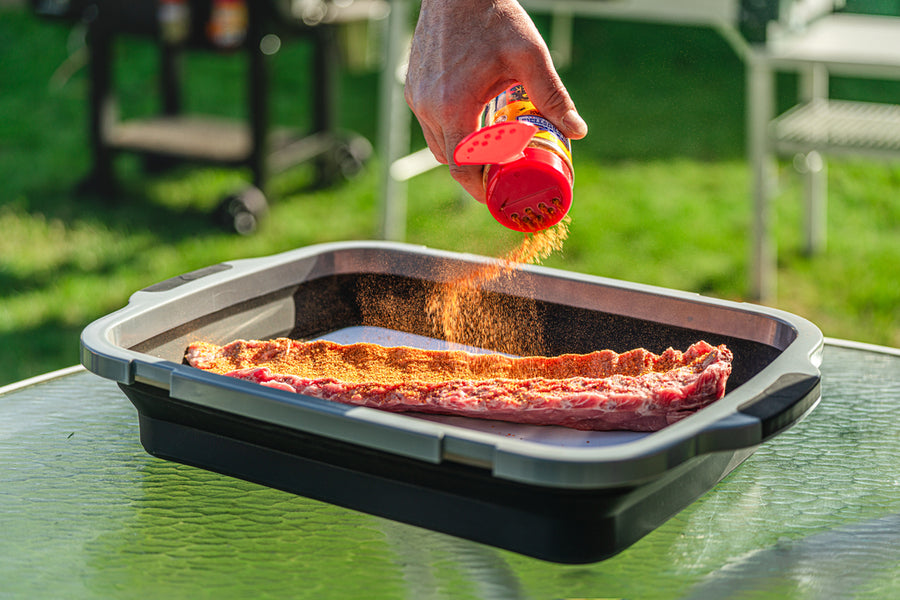
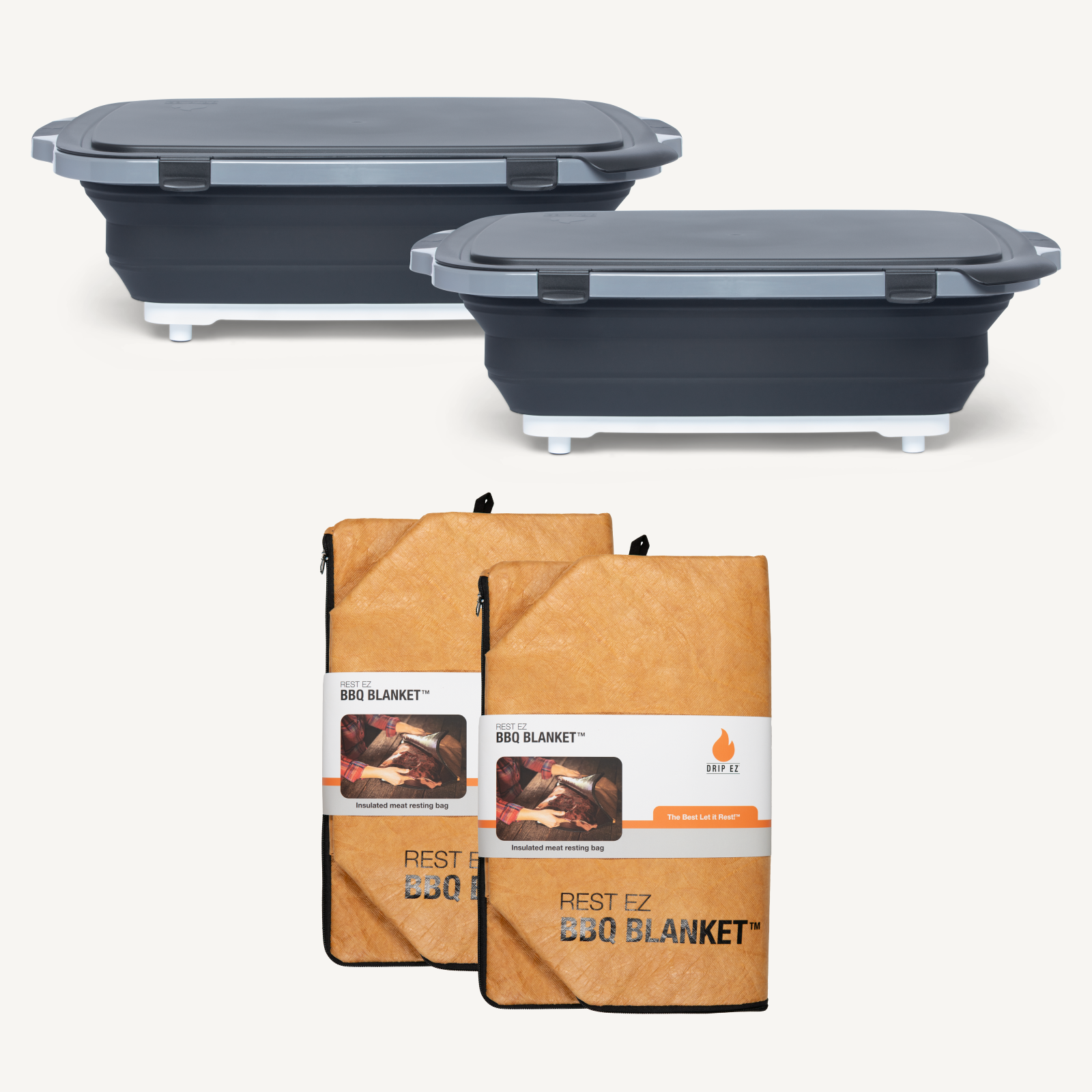
Whatever you bring home, give yourself room to work with it. Trimming a pork shoulder on a cutting board the size of a coaster is how seasoning ends up on the floor, so a proper board and a prep tub keep the whole operation on the counter where it belongs.
Now go (confidently) ask your butcher for a hanger steak.