We can picture it now: You pulled your brisket from the smoker at what you thought was the perfect temperature. You let it rest for hours. Now, after all that time, you’re seconds away from getting to try it.
And then you make the first cut, and it cracks open like a dry piece of wood before a bonfire.
Or, worse, it resists the knife like rubber.
Some people say there are a lot of ways to get to Rome. We say there are a lot of ways to smoke a brisket. Foil boat or full wrap, 180°F or 225°F, post oak or hickory or whatever's stacked by the garage, good pitmasters disagree about the details.
(Ahem, see Exhibit A and Exhibit B).
But one thing is close to universal: the way a brisket should feel when it's ready to come off the smoker so you can avoid the horror stories and cook a buttery-smooth brisket that pleases everyone around the table.
So what temperature should you pull it at?
Most briskets finish cooking somewhere between 200 and 205°F. If you came here for a number, that's the number.
You'll notice that's well above the 145°F the USDA sets for whole cuts of beef. A brisket passes safe hours before it’s good to go, so the temperature you're chasing has nothing to do with whether it's cooked and everything to do with whether it's tender.
Which is why making brisket is both an art, and a science. A brisket isn't finished when it reaches a number on the thermometer. It's finished when its collagen has broken down into gelatin, and that takes both heat and time.
That's why the same number gives you different results on different cooks. A thicker flat, a leaner grade, a hotter smoker, a longer stall: all of it changes how much breakdown happened within the meat. So use 200°F as your cue to start paying attention, then put the thermometer down and use your hands.

The probe test
Grab a probe. An instant-read thermometer, a skewer, whatever's clean and thin. Slide it into the thickest part of the flat.
If it's done, it should go in like warm butter. No resistance, no push, and the probe just disappears into the meat.
If it's not, you'll feel a tightness, a slight grab, and you'll have to press even a little to get through.
That "even a little" might mean the brisket needs another forty-five minutes. Give it more time.
Three other ways a brisket tells you it's ready
The probe is the test, but once you've cooked a few of these, you start picking up on the rest.
It jiggles. Pick up a finished packer and the whole thing moves like it's barely holding itself together. A stiff brisket is a tough brisket.
The bark is set. Deep, dark, dry to the touch. If you can smudge it with your thumb, it needs more time.
It's well past the stall. If your brisket has been parked around 165°F for three hours without moving, you're in the stall and nowhere near done. Once it climbs out and the temp starts running again, you're in the last stretch.
If you miss, miss late
Pull too early and you get a brisket that's tough and chewy no matter how long you rest it. Pull too late and you get the dry, crumbling flat, where slices fall apart on the board instead of holding together. (Which isn’t ideal, but chopped brisket sandwiches are a legitimate joy and nobody at your table is going to file a complaint).
So if you have to guess wrong, guess long.

Then get it resting
Pulling at the right moment only counts if you rest it properly afterward.
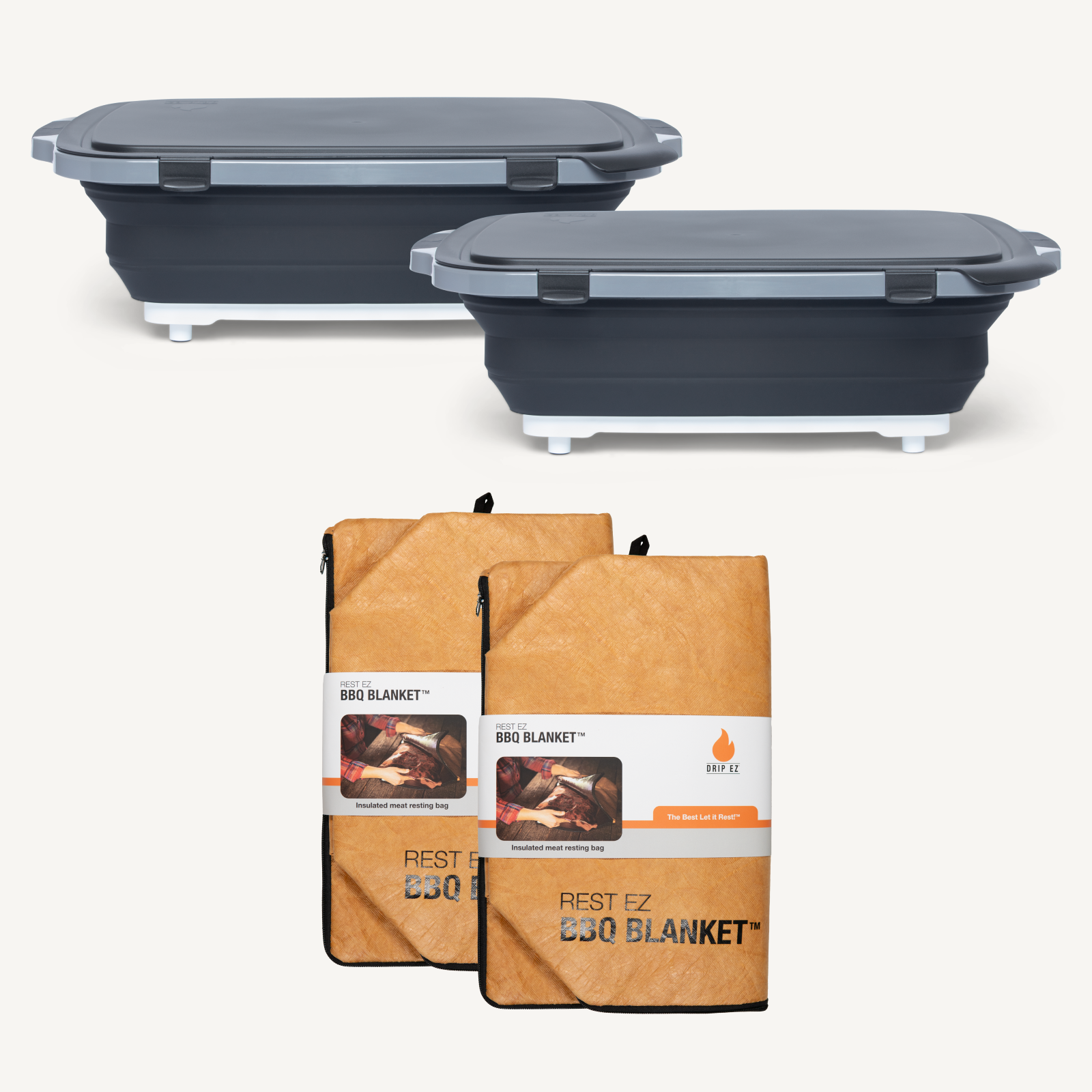
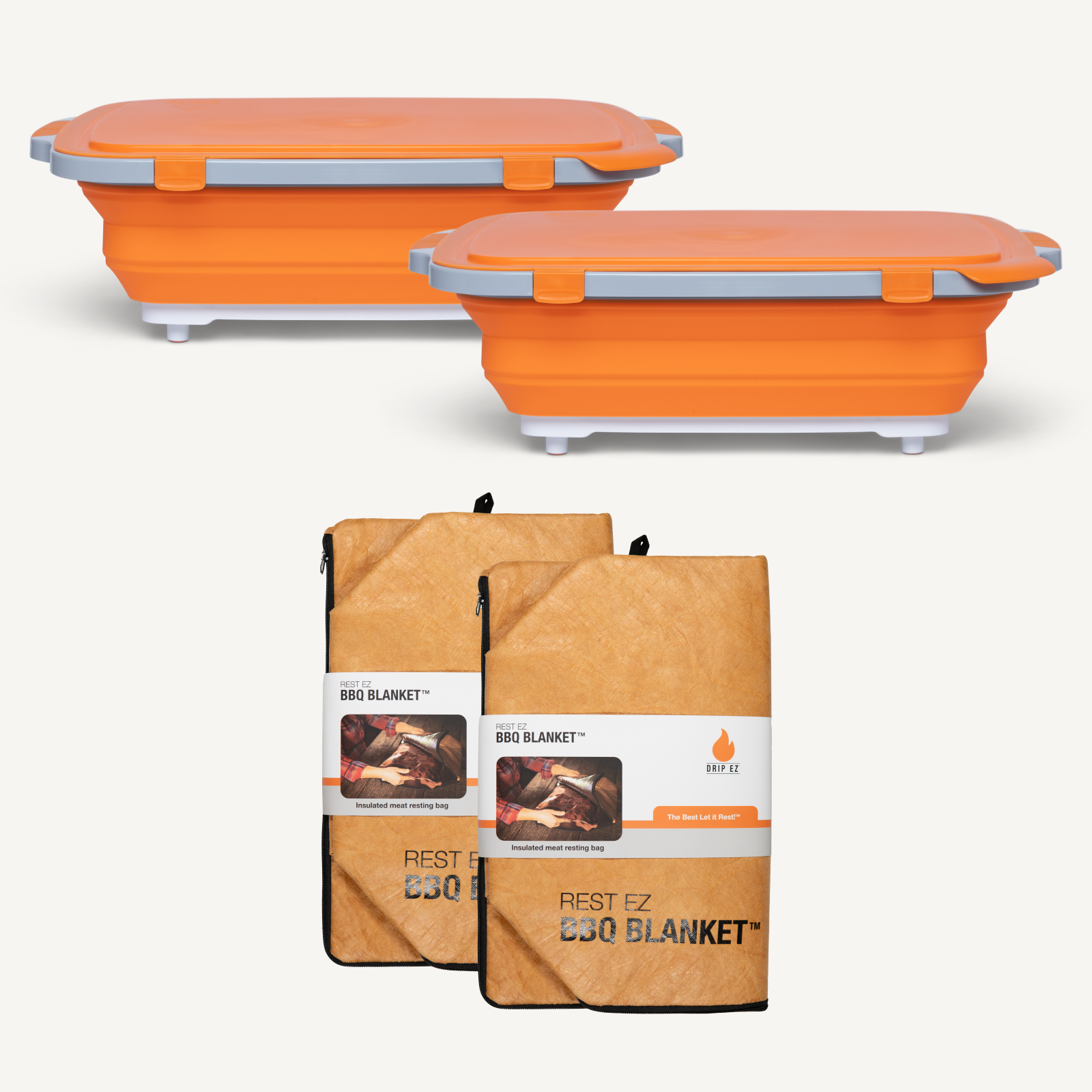
Give a packer 1 to 2 hours minimum, and build in a four-hour cushion if your timeline allows. Wrap it with our Wrap EZ heavyweight butcher paper, get it into a Rest EZ® BBQ Blanket, and let the fibers relax and the juices settle back through the meat before a carving knife goes anywhere near it. (We wrote a whole guide on how to rest your meat after smoking, because it's the step that arguably matters as much as the cooking).
You already waited this long. Another few hours won't kill you.
Ready to Cook a Better Brisket?
From the trim to the rest, Drip EZ gear takes the mess and the guesswork out of the longest cook in barbecue.